If you own a country home in Whitchurch-Stouffville — a farmhouse, an estate property, a home on acreage — you already know two things: the floors are cold, and heating it with propane or oil isn’t cheap.
Both of those often trace to the same places, and both are exactly where closed-cell spray foam does its best work. In a rural home on expensive fuel, foam isn’t a luxury upgrade — it’s frequently the highest-payback insulation money you can spend. Here’s where.
Why foam matters more in a country home on propane or oil
Two things stack up in a rural Stouffville home:
Expensive heat. Propane and heating oil cost significantly more per unit of heat than natural gas. So every draft and every cold surface costs you more than it would cost a town home on gas.
Leaky, complicated construction. Older farmhouses, homes with additions built over the decades, crawlspaces, and spaces on posts or piers — these have far more air leakage and awkward assemblies than a tidy subdivision house.
Closed-cell spray foam attacks both at once: it air-seals and insulates in one pass, and it handles the moisture and irregular surfaces that come with rural construction. On an expensive-to-heat country home, that combination pays back faster than almost anything else you can do.
The two products:
| ½ lb open-cell | 2 lb closed-cell | |
|---|---|---|
| Approx. R per inch | ~R-3.5 – R-3.8 | ~R-6.0 – R-7.0 |
| Own vapour barrier? | No | Yes, at sufficient thickness |
| Moisture | Absorbs | Resists |
| Conforms to irregular surfaces | Yes | Yes |
| Best here for | Interior walls, sound | Crawlspaces, rim joists, cold floors, additions |
½ lb open-cell → · 2 lb closed-cell →
Where foam pays off in a rural Stouffville home
1. The crawlspace
Many country homes and additions sit over a crawlspace rather than a full basement, and it’s usually the single biggest source of cold floors and wasted heat in the house.
What’s there now: often nothing, or sagging batts stuffed between the floor joists overhead, sometimes over a dirt floor with a couple of vents to the outside.
Why it fails: batts fall down and absorb ground moisture; vented crawlspaces let in humid outside air; a dirt floor pumps moisture up into the house.
The closed-cell approach:
- Fix any drainage/standing water first (non-negotiable — see below)
- Lay a proper ground vapour barrier over exposed soil
- Spray closed-cell foam on the crawlspace walls, seal the rim joist and perimeter — turning the crawlspace into a sealed, insulated, conditioned space
On a propane-heated home, sealing the crawlspace can make a large dent in both comfort and the fuel bill.
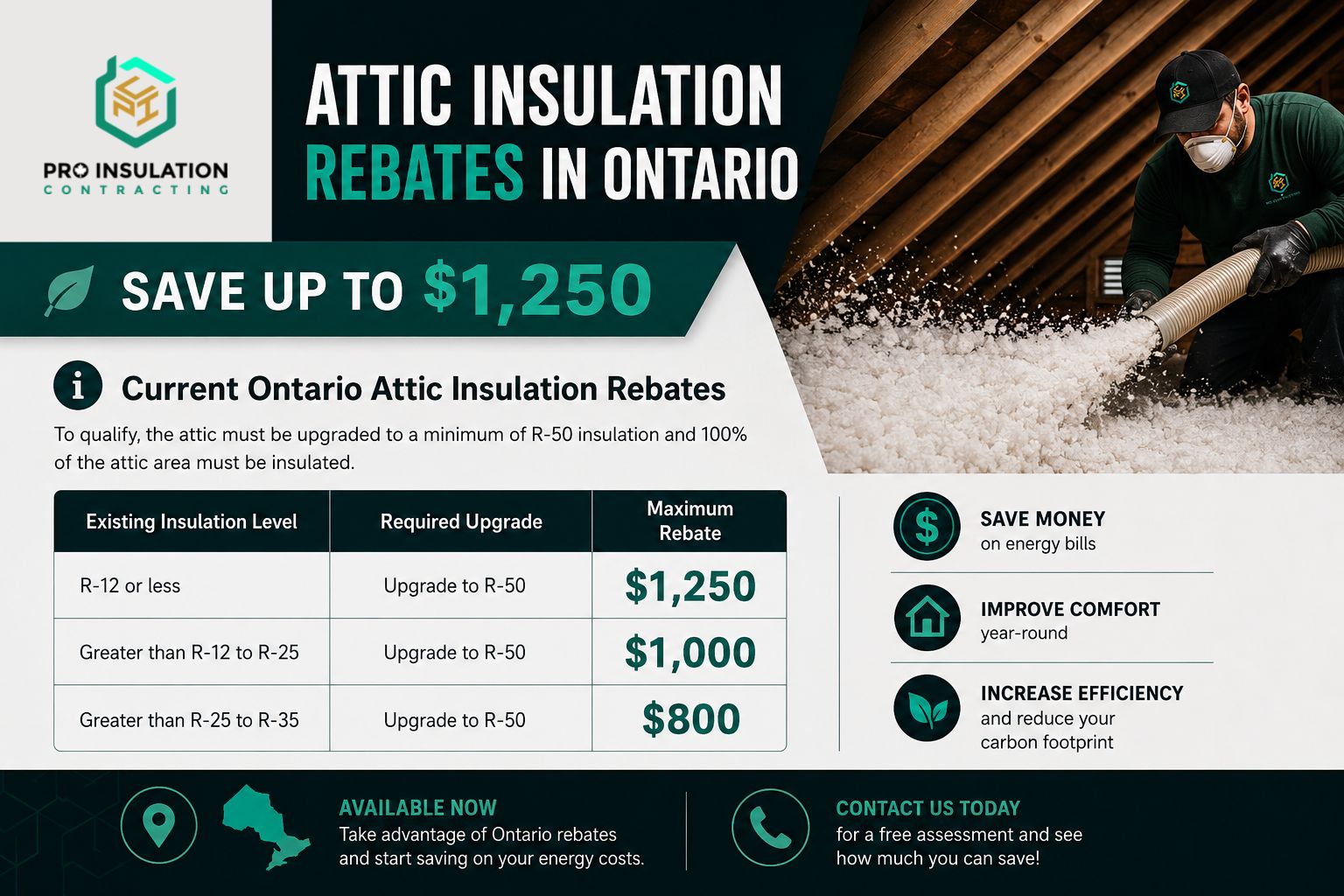
Crawlspace rebate note: crawlspace walls (up to $1,200) and crawlspace ceiling (up to $1,200) are each their own rebate measure on the bundled path. Stouffville rebate guide →
⚠️ Sealing a previously-vented crawlspace changes how it manages moisture and must be done as a complete system — vapour barrier, wall foam, rim joist, plus attention to any combustion appliances (furnace, water heater) and radon in that space. Assessment-first, not a DIY foam-kit job.
2. Cold floors over unheated spaces
Rural homes are full of these: a room over an unheated porch or summer kitchen, an addition on posts or piers with open air underneath, a bump-out over a crawlspace. The floor is cold because there’s outside air under it.
Closed-cell foam sealed into the floor structure from below (where accessible) stops the air movement and insulates the floor. It’s often the fix for that one room that’s always freezing.
3. The rim joist — every farmhouse has a leaky one
The band of framing at the top of the foundation, usually holding a scrap of fibreglass or nothing. On an old farmhouse it’s frequently a major leak, especially where old timber sits on uneven foundation. Closed-cell seals and insulates it in one pass — cheap, high-impact, and a qualifying rebate measure ($300).
4. Additions and wings
Rural homes accumulate additions, and each one was built to the standard (and budget) of its day, often poorly insulated. Foam is frequently the best way to bring a cold addition up to par, especially if it has shallow roof cavities or sits over an unheated space.
5. The garage or shop, and the room above it
Many country properties have a detached shop or an attached garage with space above. Closed-cell in the garage ceiling fixes the cold room above; foam in a heated shop makes it usable. Garage ceiling insulation →
The rule that overrides everything: fix water first
Rural homes on wells, with older drainage and sometimes high water tables, make this even more important than in town.
Insulation does not fix a wet crawlspace or basement. Foam over an active moisture problem hides it — it doesn’t stop it. Before any foam goes below grade:
- Standing water and active leaks resolved
- Grading and drainage directing water away
- The crawlspace or basement’s moisture behaviour understood
If someone wants to foam a damp rural crawlspace without discussing water, get a second opinion.
Where foam isn’t the answer
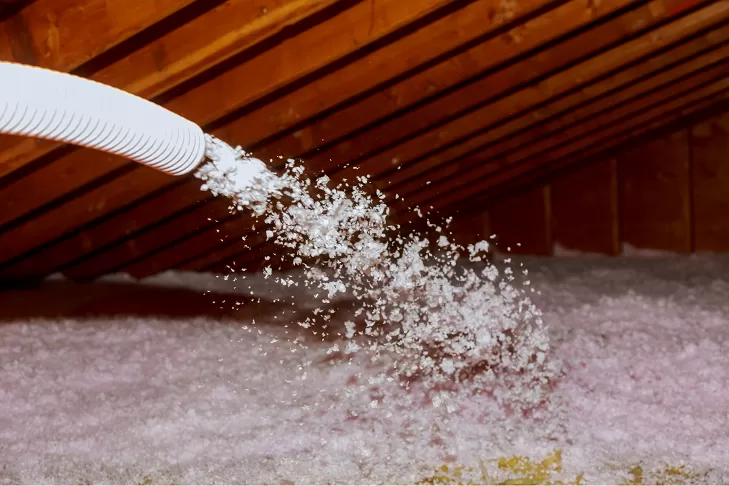
Your attic, if it’s a standard truss attic with headroom — blown-in reaches R-60 for less. Attic insulation in Stouffville →
Interior walls where you only want quiet — mineral wool does sound better and cheaper. Safe and Sound →
Over an unresolved water problem — always fix the water first.
Practical questions
I heat with propane. Where should I start? Usually the biggest air-leak-plus-cold-surface spots: the crawlspace, rim joist, and any cold floors over unheated space. That’s where foam pays back fastest on expensive fuel. An assessment prioritises for your specific home.
Do I need to leave during installation? We install Insulthane Extreme by Elastochem and residents can generally remain. We’ll discuss ventilation and re-entry for the sprayed area, and flag any respiratory sensitivities. In a crawlspace with a furnace or water heater, combustion safety is part of the plan.
Can I foam my own crawlspace with a kit? Not advised beyond small gaps — crawlspace sealing is a system (vapour barrier, wall foam, rim joist, combustion and radon considerations). Getting one part wrong can cause a moisture or air-quality problem.
Does closed-cell need a separate vapour barrier? At sufficient thickness it acts as its own. Assembly-specific, stated on the quote. Vapour barrier installation →
Does crawlspace and rural work qualify for rebates? Crawlspace, basement wall, and rim joist each carry their own amounts on the bundled path — and importantly, propane/oil/wood-heated homes on the electricity grid ARE eligible for the program, contrary to what a lot of rural homeowners assume. Stouffville rebate details →
⚠️ Program terms change — confirm at homerenovationsavings.ca.
Get a rural home assessed by someone who gets rural homes
Crawlspaces, additions, cold floors, expensive fuel — a country home has a different set of problems than a subdivision house, and the payback on getting them right is bigger when you’re heating with propane or oil. We’ll assess the whole home, prioritise by payback, and quote a fixed price.
Pro Insulation Contracting has insulated Ontario homes for over 10 years and serves Whitchurch-Stouffville, town and country.
📞 (416) 315-0471 · Book a free assessment →