Stouffville is two places at once. There is the town, with its older core and its newer subdivisions, and there is the countryside around it, with farmhouses and detached homes on open lots. A house on a sheltered street and a house standing alone in a field face very different winters. The wind alone changes what matters.
Attic insulation is the common starting point. What comes after depends on where you live.
Start here, wherever you live: the attic
Check it
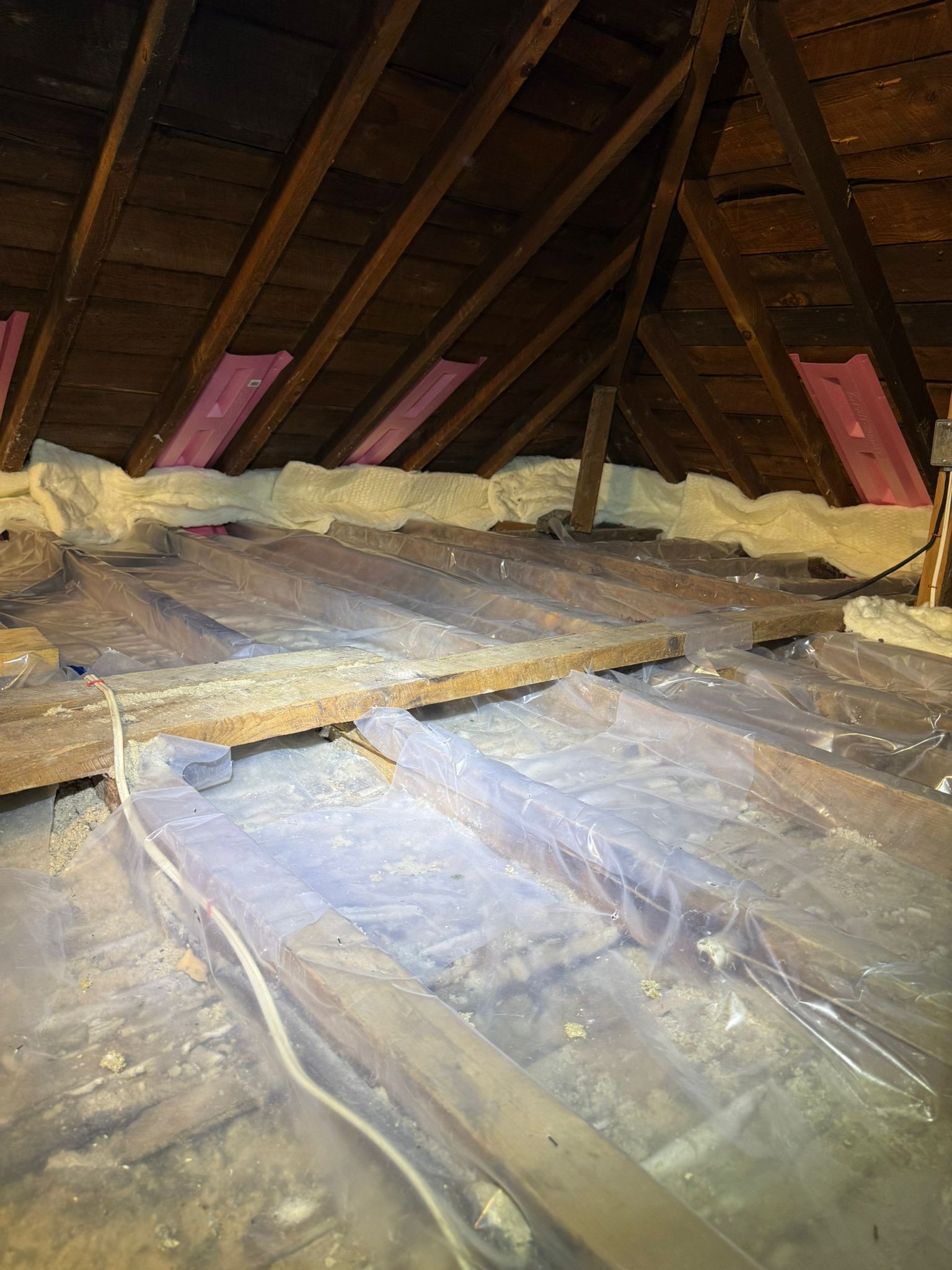
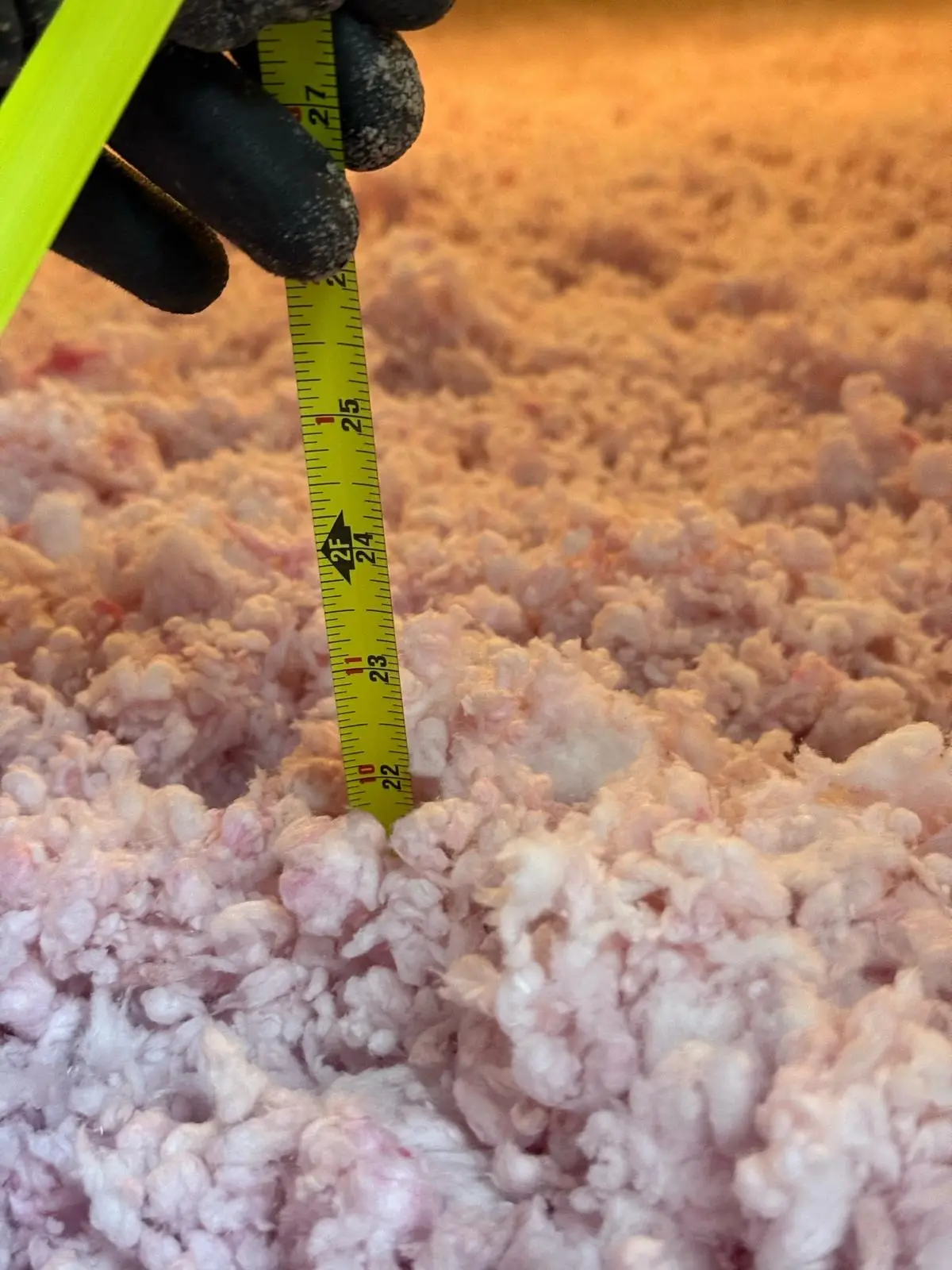
Look in from the hatch. Visible joists, thin patches or dark, matted areas all mean work is needed. Use our guide on how to check your Stouffville attic before winter.
Seal it
Natural Resources Canada’s Roofs and attics guide says air leaks at chimneys, vents, plumbing pipes and electrical boxes can account for substantial heat loss and lead to moisture problems. Seal first.
Insulate it
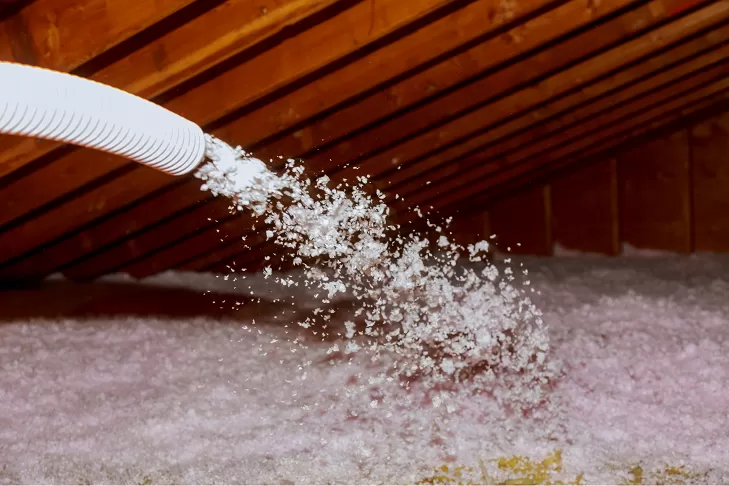
Our attic insulation service in Stouffville installs blown-in cellulose and fibreglass. Baffles keep the eaves ventilated. Damaged material comes out first through our removal service. See also attic mould and insulation removal in Stouffville.
We explain how the job differs by setting in town homes and country homes are different.
If you live in town
In a subdivision, neighbouring houses block some of the wind, so the main issues are overhead and at the garage.
- Top up thin attic insulation. Newer homes are not exempt.
- Fix the room over the garage with garage ceiling insulation.
- Seal the rim joist with spray foam insulation.
Older homes near the centre need a closer look. Read Stouffville is still half small town, and its older homes show it.
If you live in the country
An exposed house loses heat faster because wind drives cold air through every gap. Air sealing matters as much as insulation depth.
- Prioritise air tightness. AeroBarrier seals leaks across the whole envelope.
- Use spray foam where wind gets in. It insulates and air seals together, which is why we call it the rural home’s best friend.
- Fill old walls. Farmhouse walls are often empty. Drill and fill insulation fixes that without removing the interior finish. Natural Resources Canada notes that uninsulated walls can lose more heat than a typical attic.
- Watch for vermiculite in older attics and leave it undisturbed until it has been assessed.
For more, see farmhouse to subdivision: attic insulation for a town growing in two directions.
Small jobs for any home
Weatherstrip exterior doors and the attic hatch, caulk window trim, replace the furnace filter and keep heat registers clear. Natural Resources Canada’s materials guide covers weatherstripping types.
What you can expect to save
The U.S. EPA estimates that air sealing and adding insulation in attics, crawl space floors and basements saves an average of 15% on heating and cooling costs (ENERGY STAR). That is a modelled U.S. average. If you heat with propane, oil or electricity, your own figures will look different.
Rebates if you are not on natural gas
Many rural homes are not connected to gas, and owners assume that rules them out of rebates. Read yes, you can get the insulation rebate without natural gas and our energy rebate page, and confirm the current rules before you book.
Town or country, start with a look
Contact us for an estimate and we will tell you what your house needs.